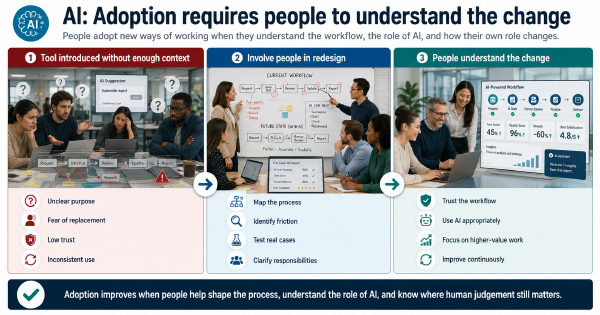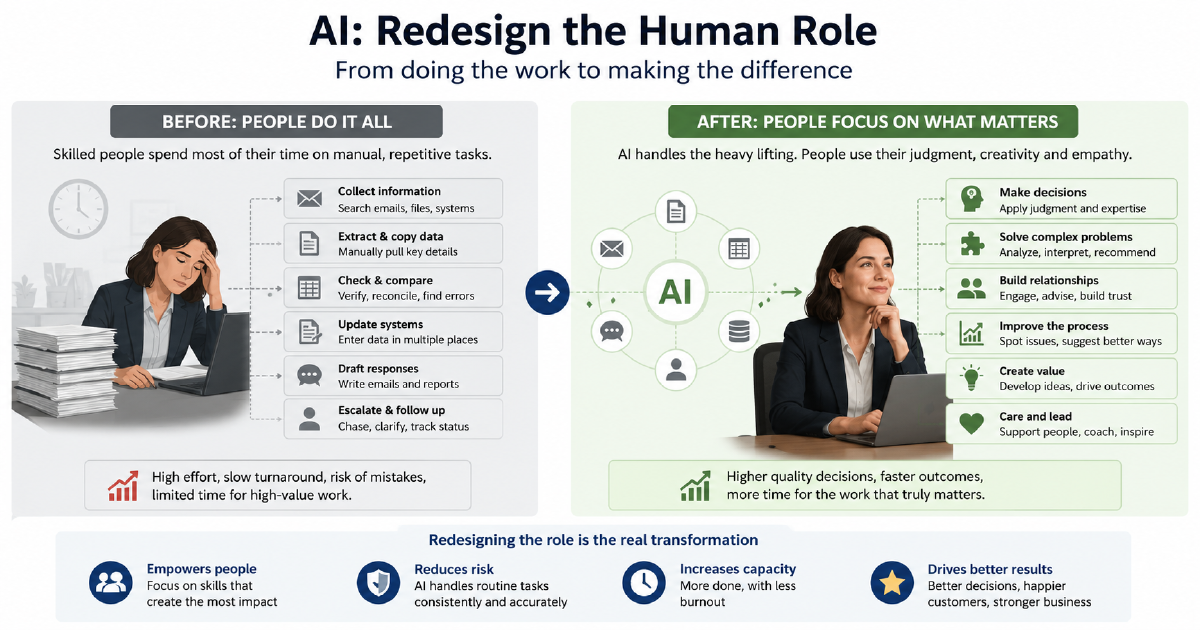
Successful AI adoption does not simply replace human tasks. It changes what people spend their time doing.
For example: #
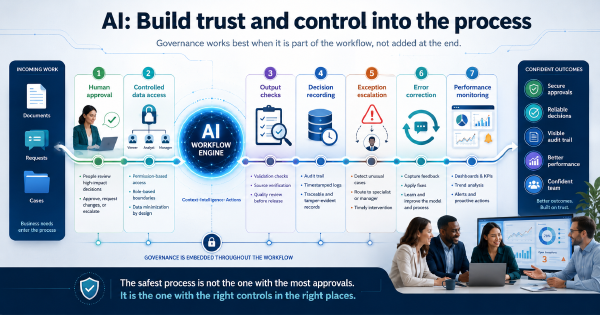
- AI prepares; people approve.
- AI monitors everything; people investigate exceptions.
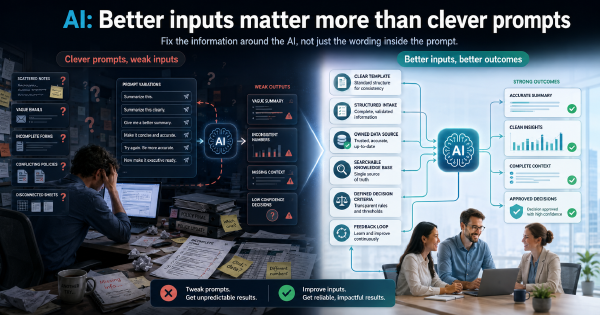
- AI finds relevant information; people make the judgement.
- AI produces the first draft; people add context and accountability.
This keeps human expertise focused on the parts where it creates the most value.
Example
Redesign the human role #
A bank may introduce AI to help its lending team assess small-business loan applications.
The quick win is where the AI produces a summary for an underwriter. The underwriter still checks every bank statement, reviews every document, verifies the figures and makes the final decision. The work is slightly faster, but the human role has not really changed.
The real win is when the bank then redesigns the process.
AI now checks that documents are complete, extracts financial data, identifies inconsistencies, calculates affordability and compares the application with the bank’s lending criteria. Straightforward, low-risk applications can proceed automatically within agreed limits.
Underwriters no longer spend most of their day checking routine information. Their role becomes handling unusual cases, applying judgement where the evidence is unclear, speaking to applicants with complex circumstances and improving the rules used by the AI.
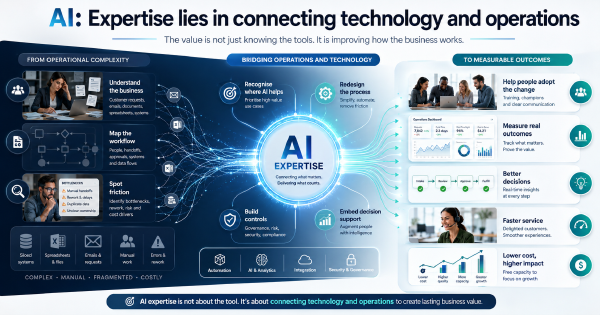
The human hasn’t been removed. Their expertise has been moved to the part of the process where it creates the most value.
The weak approach gives every underwriter an AI assistant. The stronger approach redesigns the underwriter’s job around judgement, exceptions and customer outcomes.
See this play out in the real world in IKEA frees staff to be creative and in how we redesigned claims handling for a health insurer.