A regional insurance company rolls out an AI assistant to help claims handlers review incoming claims.
The system summarises documents, flags missing evidence and suggests which policy clauses apply. Technically, it works well. But nobody explains it beyond “this will make the process more efficient.”
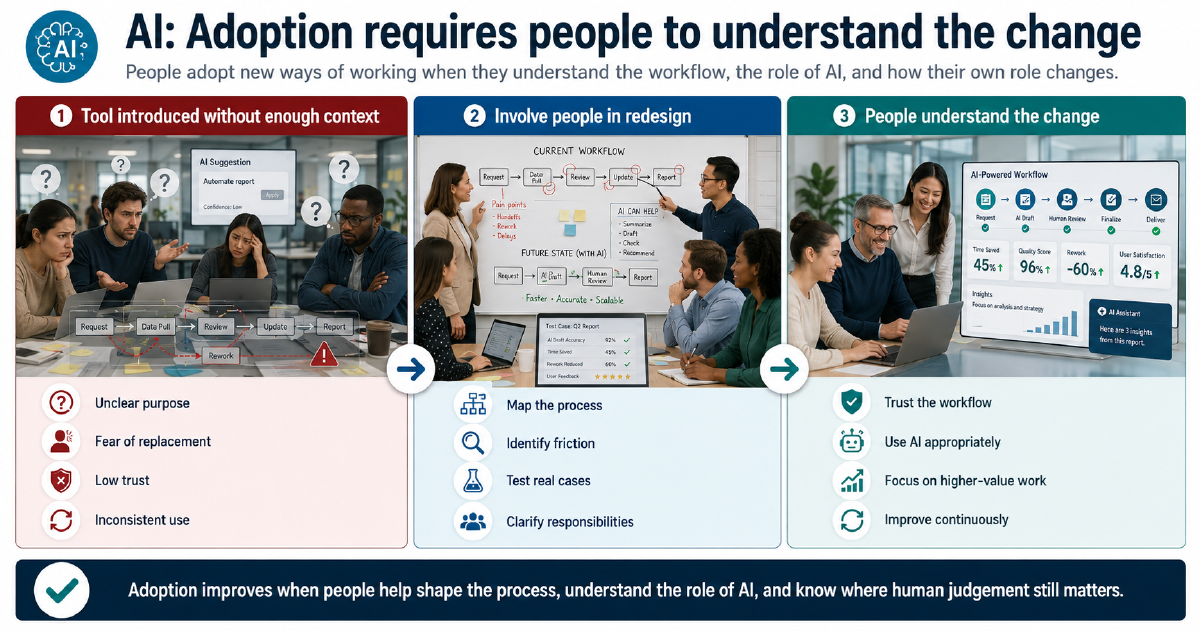
So employees fill the gap themselves. Many assume the AI is there to replace part of their job. Some ignore its recommendations. Others accept them without checking, because they’ve decided the system owns the decision now. Experienced handlers notice it struggles with vulnerable customers, unusual property damage and handwritten evidence - but there’s no way to flag that.
So the company changes tack.
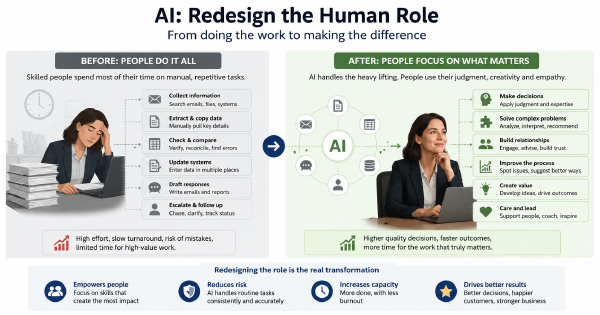
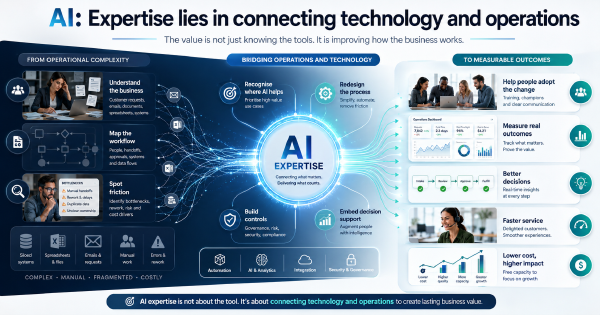
It brings claims handlers into workshops to map the real process and find out where time actually goes. The answer isn’t the final decision - it’s reading repetitive documents, chasing missing information and digging through policy manuals.
Together, they redesign the workflow:
- AI prepares the initial case summary.
- It flags missing documents and the relevant policy sections.
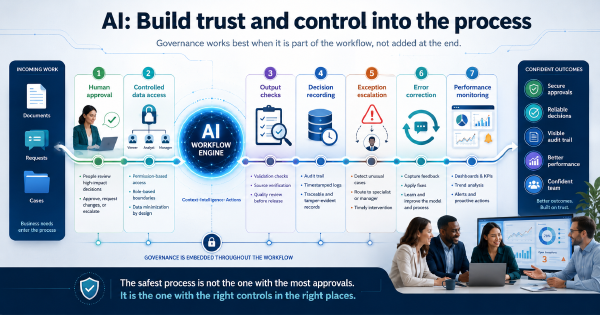
- Claims handlers verify the evidence and make the final call.
- Sensitive or unusual cases go straight to experienced reviewers.
- Employees can flag a bad recommendation right inside the case.
- Weekly reviews check flagged cases and update the AI’s guidance.
The company spells out who owns what. AI organises information and flags possible issues. The claims handler owns the judgement call - reading the customer’s circumstances and signing off the outcome.
Because employees helped build and test the process, they understand what the system can do and where it falls short. They use it more, push back on it more confidently, and spot where it needs to improve.
The best idea in the whole redesign came from the claims handlers themselves: request missing evidence automatically at the start of a claim, instead of just speeding up the final summary. That one change cuts avoidable follow-up work across the entire department.
Adoption improves when people aren’t simply trained to use a new tool - they’re involved in deciding how the work itself should change.