Before choosing a tool, understand:
- What outcome the process is meant to produce
- Which steps genuinely add value
- Where delays and errors occur
- What information each person needs
- Which decisions are predictable
- Which cases require human judgement
Only then should you decide where AI belongs.
Example #
A growing company decides to use AI to improve employee onboarding.
It buys an AI chatbot that can answer new starters’ questions. The chatbot works, but employees still spend their first week waiting for laptops, chasing system access, repeating personal information across several forms and asking managers what they should be doing.
The technology has improved one small part of the experience, but the underlying workflow remains broken.
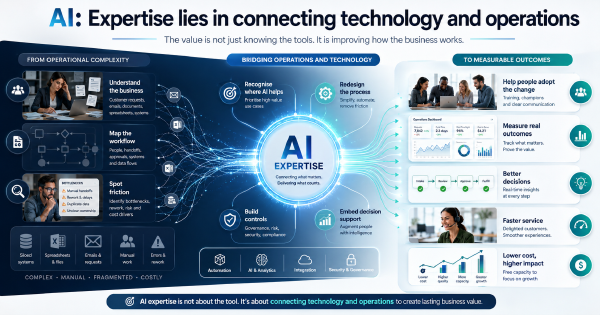
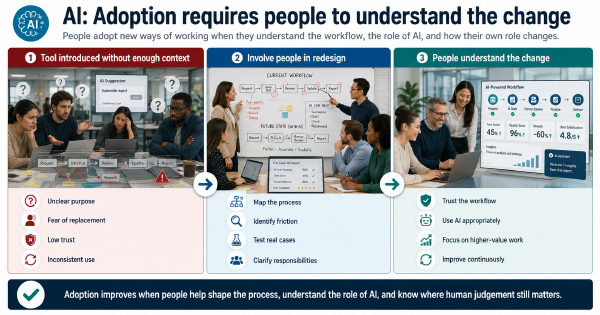
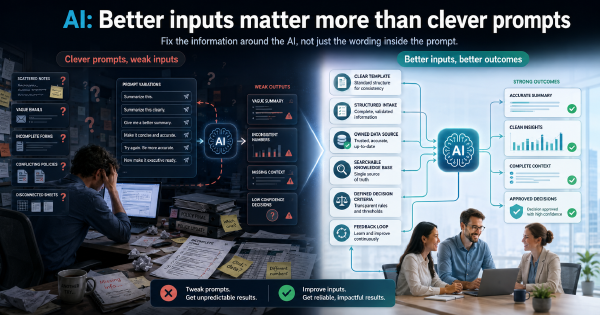
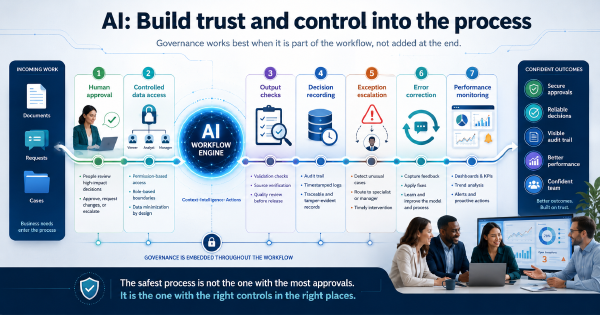
A workflow-first approach starts by mapping the entire journey from signed contract to productive employee. This reveals that HR, IT, payroll, security and the hiring manager each begin their work at different times, often using separate spreadsheets, emails and forms. Most delays come from missed handoffs rather than difficult tasks.
The company redesigns the process so that accepting an offer triggers a single coordinated workflow. AI extracts the required information from the employee’s documents, prepares payroll and account requests, creates a role-specific onboarding plan, schedules training and alerts people only when human input is genuinely required.
The chatbot can still answer questions, but it is no longer the centre of the solution.
The real gain comes from redesigning the workflow so that information is entered once, tasks begin automatically and new employees arrive with everything ready.
Starting with the technology produced a better chatbot. Starting with the workflow removed three days of delay from every new hire.